How to Gauge Local Market Demand Before Expanding
Entering a new local market is a move that can define a company's next growth phase, but it comes with real risk. Without a clear picture of demand, a business can sink time and budget into a location that never generates enough interest. A structured approach to market opportunity analysis helps separate promising areas from costly dead ends. The goal is to gather enough evidence to decide whether to proceed, pivot, or pause.
Start With the People Who Will Buy
Every local market starts with its residents and workers. The first question to answer is whether the people in that area have the problem your product or service solves. Look at population density, household income ranges, and demographic profiles. A neighborhood full of young renters might respond well to a delivery service or a co-working space, while a suburb with families could be a better fit for home services or children's activities.
Demand also shows up in search behavior. Local search volume for terms related to your offering is a direct signal. If people in the area are already looking for what you provide, the market is telling you something. If search volume is low, it could mean the need is already met by existing providers, or that the local audience hasn't been educated about the product. Either way, more investigation is needed.
Customer segments matter too. A single market might contain several distinct groups with different needs. A health food brand could find interest among fitness-oriented young adults and also among older residents looking for dietary alternatives. Identifying which segment has the strongest intent helps focus your early efforts.
Examine the Competitive Landscape
Competitor activity is one of the most revealing signals in market opportunity analysis. A market with few direct competitors might seem attractive, but it could also mean there is not enough demand to support a business. Conversely, a market with many competitors may be saturated, or it could indicate strong demand that is not fully served.

Map out who is already operating in the area. Look at their online presence, customer reviews, and pricing. Reviews are especially useful because they highlight gaps. If customers frequently complain about slow service, limited hours, or a lack of a certain feature, those complaints point to opportunities. A new entrant can address those weaknesses and capture the dissatisfied portion of the market.
Also consider indirect competitors. A local coffee shop competes not just with other coffee shops but with tea houses, juice bars, and even fast-food breakfast options. Understanding the full competitive set helps you estimate how much of the local spending you can realistically capture.
Identify Market Gaps
Gaps are the spaces between what customers want and what current providers deliver. They can be obvious, like a neighborhood without a pet supply store despite a high number of dog owners. Or they can be subtle, such as a demand for organic produce that local grocery stores only half-heartedly stock.
One way to spot gaps is through social listening. Local community groups, forums, and review sites often contain direct requests: "I wish there was a place that..." or "Why doesn't anyone offer..." These comments are raw, unfiltered demand signals. Another method is to analyze local events and seasonal patterns. A market that hosts large festivals or conventions might have a temporary spike in demand that a smart business can serve.
Opportunity scoring can help prioritize gaps. Not every gap is worth filling. Consider the size of the underserved group, the ease of entry, and how well the gap aligns with your existing strengths. A gap that fits your business model and has a clear customer base is worth pursuing. One that requires a completely new skill set or large upfront investment might be better left alone.
Measure Customer Intent
Intent is different from interest. Many people might say they would buy a product, but actual purchase behavior tells a different story. Paid search ads can serve as a cheap test. Run a small campaign targeting the new market and see how many clicks and inquiries you get. The click-through rate and cost per click give a sense of how actively people are seeking the solution.
Another practical method is to set up a simple landing page for the new location with a call to action like "Get notified when we open" or "Reserve a spot." The number of sign-ups is a direct measure of intent. If the response is strong, you have evidence that demand exists. If it is weak, you may need to adjust your offer or reconsider the market.
Surveys can also work, but they require careful design. Ask about specific behaviors: "How often do you currently buy this type of product?" rather than "Would you buy from us?" Past behavior is a better predictor of future action than stated interest.
Focus on the Right Growth Priorities
Not all potential markets are equal. After gathering data on demand, competition, gaps, and intent, the next step is to rank the opportunities. Prioritize markets where demand is clear, competition is manageable, and gaps exist that you can fill. Avoid markets where you would have to fight an entrenched leader with a much larger budget or where demand is too thin to support your business model.
Part of this process involves understanding the cost of entry. Rent, local regulations, hiring, and marketing costs vary by location. A market with high demand but prohibitive costs might be less attractive than a smaller market where you can operate profitably from day one. Use a weighted scoring system that accounts for both opportunity size and operational feasibility.
Revisit your priorities regularly. Markets change. A neighborhood that looks unpromising today might shift as new developments are built or as demographics evolve. Keeping an eye on local trends ensures you do not miss a window of opportunity.
Use Data to Stay Objective
Emotion and gut feeling have a place in business, but market entry decisions benefit from cold, hard data. Collecting the right signals and analyzing them systematically reduces the chance of expensive mistakes. Tools that aggregate local search volume, competitor presence, and demographic data can speed up the process. The idea is to build a repeatable method so that evaluating a new market becomes a routine part of your growth strategy rather than a one-off guess.
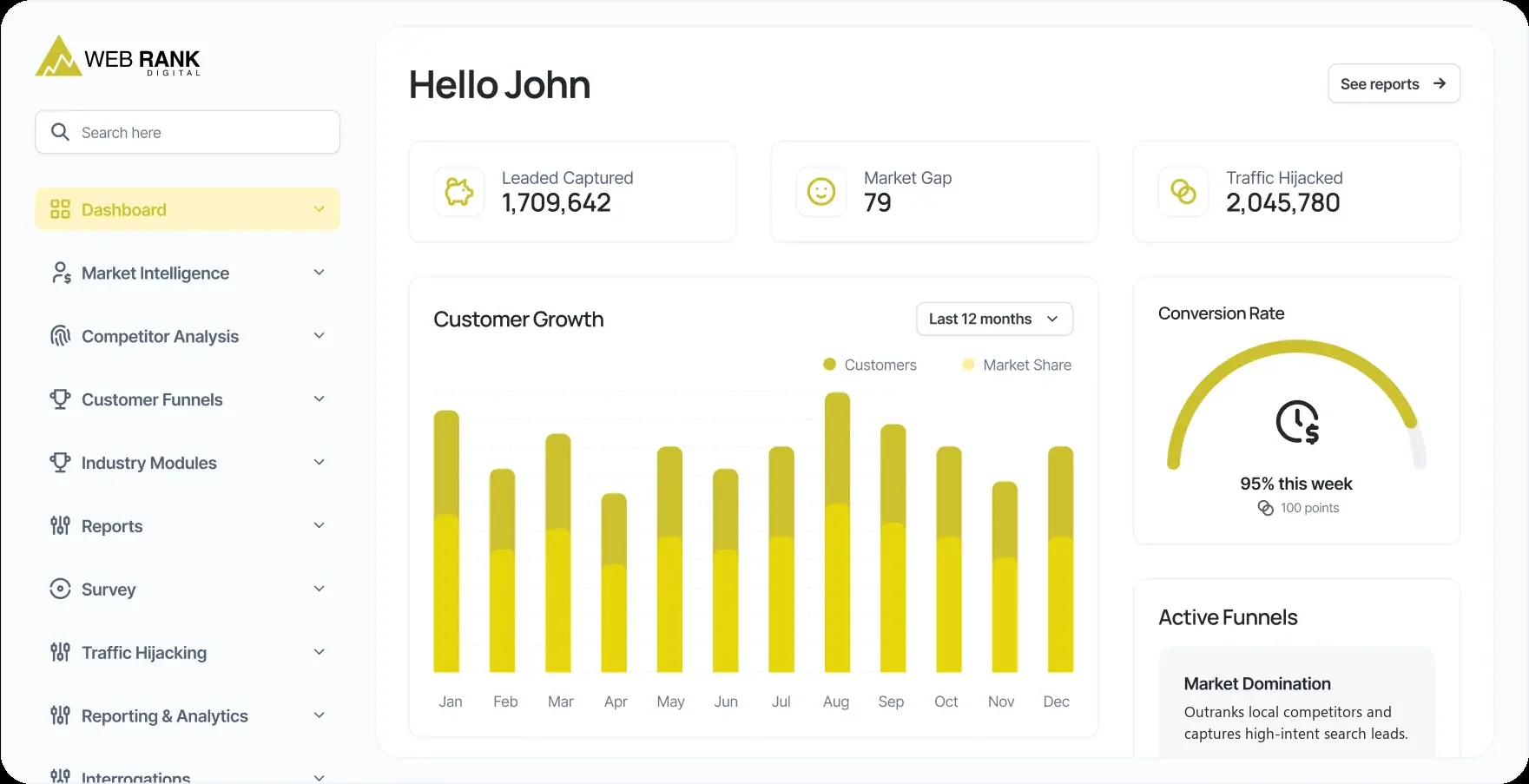
This is where data driven customer growth insights become valuable. By examining real behavior patterns across multiple markets, you can see which factors consistently predict success. Over time, that knowledge refines your criteria and makes each subsequent evaluation faster and more accurate. The same approach helps you spot when a market is no longer worth serving, so you can reallocate resources before losses mount.
When you combine local search data, competitor analysis, and direct customer feedback, the picture becomes much clearer. You no longer wonder whether a market has potential; you know based on evidence. That shift from guesswork to informed decision-making is what separates successful expansions from costly experiments.
Build a Repeatable Evaluation Process
The real power of a structured checklist is that it turns a one-time analysis into a repeatable system. Each market you evaluate adds to your understanding of what works and what does not. The criteria that matter most in one region might shift in another, but the framework stays the same.
Start with a simple template. List the key questions: Who is the target customer? How many are there? What are they searching for? Who else serves them? What complaints do they have? How much would it cost to enter? Score each factor and set a minimum threshold. If a market scores below that threshold, move on. If it scores above, proceed to deeper due diligence.

Sharing the results across your team also helps. When everyone sees the same data and the same reasoning, it is easier to align on priorities. The conversation shifts from "I think this market is good" to "The data shows this market is good because..." That clarity reduces internal friction and speeds up execution.
Ultimately, the goal is not to eliminate risk. No analysis can guarantee success. But a thorough market opportunity analysis reduces the odds of walking into a situation where the fundamentals are wrong. It gives you confidence that the decision is based on something solid, and it helps you explain that decision to investors, partners, and your own team.
Every new market is a bet. The job of analysis is to make that bet as informed as possible. Using data driven customer growth insights to guide each step keeps the focus on what actually matters: real people with real needs who are ready to buy. That is the foundation of any successful local expansion.